O.P. Jindal Global University | JSGP PhD Study

Digital Capabilities
for Life Outcomes

Evaluating digital state systems and platform ecosystems not just by adoption scales or transactions, but by how they expand people's substantive freedoms to learn, work, and thrive.

Awaiting traffic source parameters...
DCLO Conversion Index
DPI Affordances & Resources
DCLO Conversion Capability
Safe & Just Life Outcomes
Access
Trust
Language
Agency

Human Capabilities in the Digital Age

This Ph.D. dissertation challenges technocratic "digital-divide" paradigms by evaluating whether digital public platforms expand substantive human freedoms or create top-down biopolitical controls.

Conceptual Dissertation Architecture

Capabilities Over Resources (Sen & Robeyns)

Following **Amartya Sen's Capability Approach** (Sen, 1999) and Ingrid Robeyns' translation matrix (Robeyns, 2005), public technology installations are merely resources.

A resource only translates into a substantive capability when individual, social, and environmental conversion factors are aligned. The Ph.D. measures these conversion factors (DCLO) to evaluate digital public platforms by their impact on human agency, rather than transaction scales or adoption rates.

Theoretical Frameworks:
Capability Approach Doughnut economics Loop Effects

SLR Evidence Base

PRISMA 2020 Compliant

Synthesized from 566 peer-reviewed records (Scopus/Web of Science), screening 260 priority papers appraised using the Mixed Methods Appraisal Tool (MMAT) methodology.

Finding 1 of 4

A Three-Paper Empirical Thesis

This doctoral research bridges the gap between infrastructure capacity and human development across three core inquiries.

Paper 1: Construct & Measurement

Developing and testing the multidimensional DCLO index. We test whether digital readiness predicts substantive service performance in panel data.

  • Formative index modeling
  • OECD outlier winsorisation
  • Causal OLS panel models

Paper 2: Platform ADHD Seeking

Analyzing how platform discourse shapes neurodevelopmental curiosity, medicalisation, and interactive looping behaviors online.

  • Non-diagnostic framing
  • Podcast discourse analysis
  • Subjectification loops

Paper 3: DPI Governance & Justice

Investigating linguistic conversion barriers, democratic recourse, and digital sustainability in public digital service delivery.

  • Maithili language access
  • Institutional capabilities
  • Primary field survey data
DCLO STUDY DPI SAFE SPACE Hover to Explore ECOLOGICAL CEILING (OVERSHOOT LIMIT) SOCIAL FOUNDATION (DEFICIT LIMIT)
Sustainable Development Boundary

The Safe and Just Space
for Digital Development

Applying Kate Raworth's Doughnut Economics to digital public systems reveals a critical policy constraint: digital interventions must help citizens rise above a Social Foundation of well-being without pushing planetary systems beyond their Ecological Ceiling.

Interactive Framework

Hover over or tap any sector of the Doughnut chart on the left to explore its 12 Social Foundation and 9 Ecological Ceiling dimensions. Learn how Digital Public Infrastructure (DPI) and informational capabilities can be aligned to prevent shortfalls and overshoots.

Gigler's Informational Capabilities

Building on Björn-Sören Gigler's (2011) research, physical access to DPI is merely a resource. True digital development requires informational capabilities—the individual and social conversion factors (literacy, trust, language access) that enable citizens to convert technology into human agency.

The AI Energy & Ecological Ceiling Challenge

The global AI expansion highlights the urgency of ecological boundaries. With AI queries consuming up to 10x more energy than standard searches, data centers accelerate planetary boundary overshoots. The Doughnut lens demands optimizing conversion efficiency—maximizing outcomes while remaining strictly within planetary limits.

1. Consent & Eligibility Step 1 of 7

Participant Consent & Institutional Agreement

Please read the ethical disclosure below to begin.

Demographic & Social Profile

These elements serve as vital social conversion factors in our capability models.

Dimension Category Choice
Age group
Gender
Highest education completed
Main work/study status

Core Digital Capabilities (DCLO Subscales)

Rate your level of agreement across these capability dimensions.

Statement Strongly Disagree Disagree Neither Agree Strongly Agree N/A
I have reliable access to the devices I need for important tasks.
Internet/data costs are affordable for me.
I can find information online when I need it.
I can judge whether online information is reliable.
I can protect my privacy and avoid common scams.
I can learn a new digital tool when I need to.
I can communicate and collaborate online effectively.
I can use digital systems to solve practical problems.
I feel confident using digital systems for important life tasks.
I can get help when a digital service does not work for me.
To help us check response quality, please select "Agree" for this statement.

Digital Public Service Access (B3)

Which of these digital services have you used in the last 12 months? Select all that apply to explore conversion barriers.

Doughnut Outcomes: Social & Ecological Space (B4)

Evaluate whether digital capabilities translate into life outcomes (Social Foundation) and how they intersect with sustainability constraints (Ecological Ceiling).

Dimension Not at all Slightly Moderately A lot Very strongly N/A
Learning or education
Work, income, or enterprise opportunities
Health or wellbeing
Social connection and belonging
Access to public or essential services
Voice, rights, or civic participation
Dignity, independence, or confidence
Statement Strongly Disagree Disagree Neither Agree Strongly Agree Unsure
I try to keep devices longer rather than replacing them quickly.
I consider repair, reuse, or resale before buying a new device.
I worry that digital systems can increase waste, energy use, or extraction.
I prefer digital services that reduce unnecessary travel or paperwork.
Public digital systems should be evaluated for sustainability, not just speed.

Platform Health Discourse & ADHD Curiosity (B5)

Exploring neurodivergence exposure and how algorithm channels shape self-understanding (non-clinical, non-diagnostic inquiry).

Digital Infrastructure Governance & Segments (B6 & B7)

Sharing your perspectives on structural digital governance, and answering targeted modules for research cohorts.

Statement Strongly Disagree Disagree Neither Agree Strongly Agree Unsure
Public digital services should be judged by outcome achievement, not just adoption.
Public digital systems should be easy to use in languages people understand.
People should be able to correct errors or appeal decisions in digital systems.
Privacy and data minimisation should be built into public digital services.
Open standards and reusable digital public goods improve service quality if governed well.
Public digital services should be evaluated for sustainability and environmental impact.

Digital Gaps & Anonymised Follow-Up (B8)

Almost complete. Share qualitative feedback and specify if you consent to a follow-up interview.

By clicking Submit Response, your inputs are saved to the local sandbox database for analysis. Your contribution is highly valuable for JGU doctoral research.
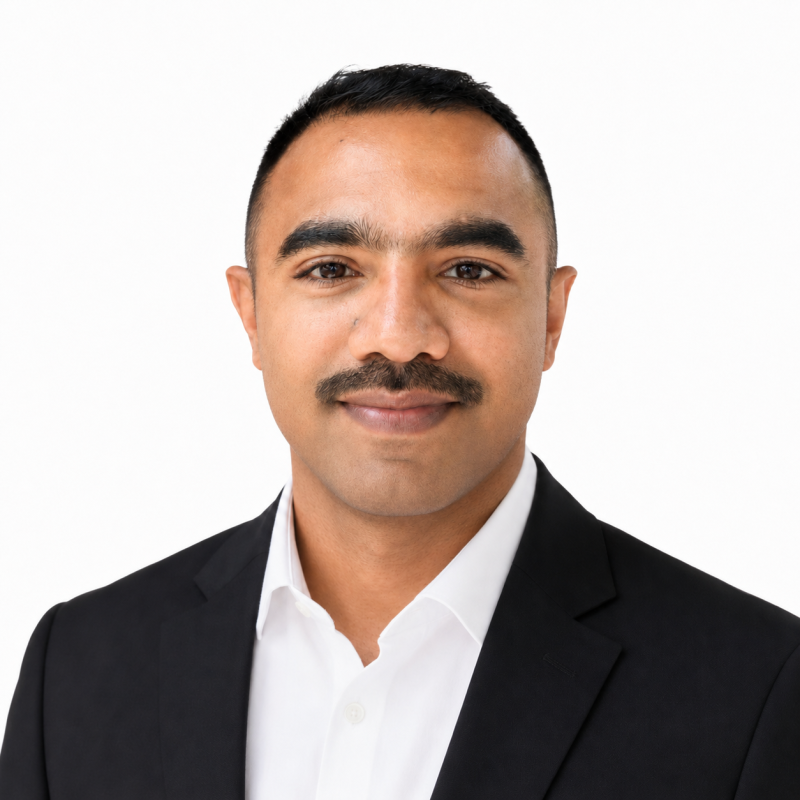
Rahul Jha

Rahul Jha

Ph.D. Candidate in Government & Public Policy

Jindal School of Government & Public Policy (JSGP) O.P. Jindal Global University (JGU)

Research Biography & Focus

Rahul Jha is a doctoral scholar specializing in technology policy, digital public infrastructure, and human development. His doctoral dissertation, "Digital Capabilities for Life Outcomes (DCLO)," bridges the gap between digital resource deployment and citizen-centric agency. His research combines quantitative econometric panel data (TWFE), computational NLP and unsupervised topic modeling on podcast networks (ADHD case study), and mixed-mode linguistic justice field studies (Maithili service journeys) to evaluate how public digital systems convert into substantive human freedoms.

His methodologies are aligned with the O.P. Jindal PhD Toolkit rules, including a strict Turnitin similarity threshold (<10%) and Research Ethics Review Board (RERB) ethical protocols.

Giving Back: Pro Bono & Specialized Consulting

As my way of giving back to the world, I offer pro bono consulting services for Philanthropic Organisations engaged in International Development across Sub-Saharan Africa, Latin America, or South Asia. To support this mission, I am actively building a dedicated team of research analysts to deliver specialized consulting services at highly affordable rates.

Interested organizations or analytical talents can get in touch at rjha11@jgu.edu.in.

Get In Touch

Contact Rahul Jha

Have questions about the DCLO framework, research collaborations, or looking for pro bono consulting? Send a message directly below.